
This checklist is for retail and private-label buyers comparing gift-set concepts. Use it to make supplier responses easier to compare, then confirm product-specific details with the selected supplier and the people responsible for your destination-market requirements.
What should a home fragrance gift set include?
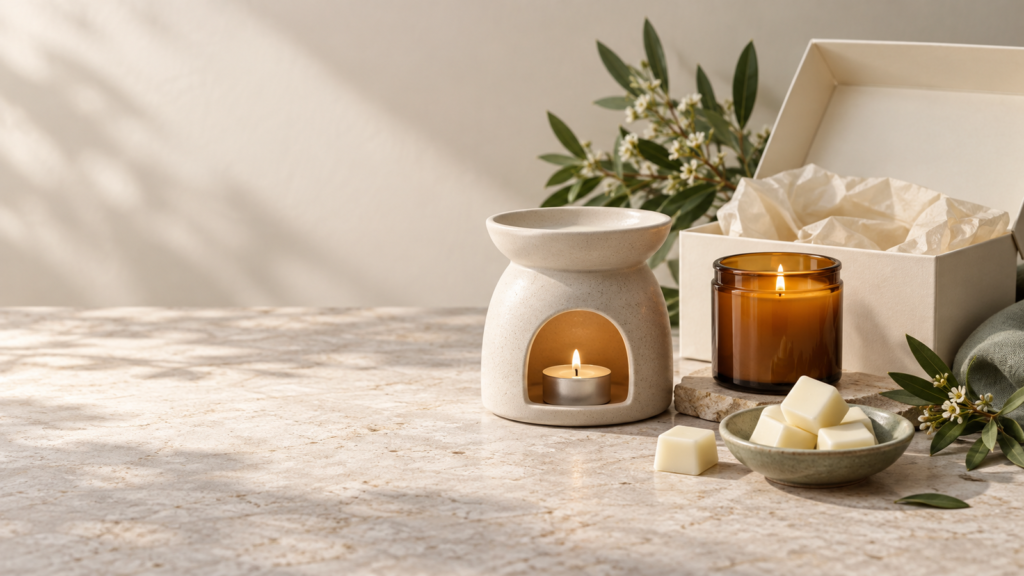
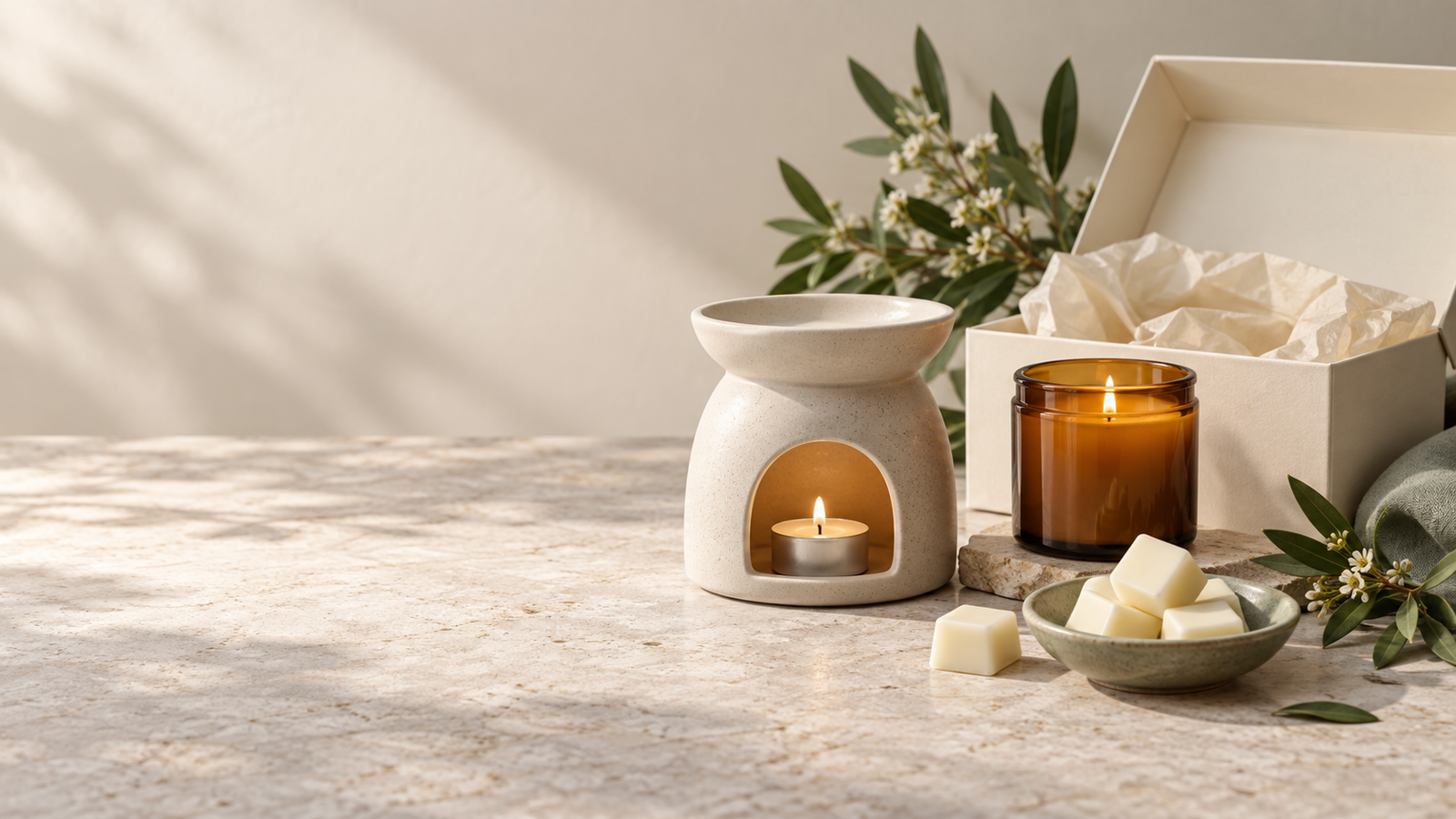
A home fragrance gift set can combine one main product with complementary items, but the right mix depends on your customer, price position, channel and market. Possible components include a scented candle, wax melts, a warmer, a diffuser or accessories. These are planning options, not a claim that every item is available in every collection.
Start with one clear role for the set: an introductory discovery set, a seasonal gift, a premium home accessory, or a coordinated private-label assortment. A simple concept helps buyers decide what belongs in the box and what should be left out.
1. Define the recipient, occasion and retail channel
Describe who is buying the gift and who will receive it. A set for a seasonal gifting table may need a different format from an everyday housewarming gift or a corporate gift program. Record the sales channel, target customer, intended shelf or online presentation and the markets where you plan to sell.
Also state what the set must accomplish: introduce a fragrance family, pair a product with an accessory, or create a ready-to-gift package. This keeps discussions about appearance and cost tied to a real use case.
2. Choose a lead product and a focused mix
Select the item that should make the set immediately understandable. Then add only components that support that use. For example, a warmer-led concept may pair a warmer with a compatible wax format; a candle-led concept may focus on vessel, fragrance and presentation.
Write down each proposed component, its material or format, the intended scent relationship and whether it is confirmed or still under review. If a set includes an electric product, identify that clearly at the concept stage so the destination-market configuration can be discussed before sampling.
3. Build a scent story buyers can explain
Choose a small, coherent fragrance direction rather than adding scents only to increase the item count. Decide whether the set should introduce one signature profile or let the recipient compare complementary options. Give the supplier plain-language references for each scent, such as fresh, woody, floral or citrus, and identify any required exclusions or existing fragrance standards.
Evaluate scent names, descriptions and samples together. Ask how the proposed names and product labels will be reviewed for your market and brand. Do not approve names or claims based only on a mood board.
4. Design the box around the actual products
List the primary and secondary packaging separately. Include the intended box style, inserts, protective materials, label or sleeve, branding, language and barcode needs. If the set will be shipped through a particular channel, explain the handling and presentation requirements you already know.
Ask for a packaging layout or sample that shows how each item is held in place. Check that the components are identifiable, the opening sequence makes sense, and the finished set can be photographed or displayed as intended. Confirm artwork ownership, approval steps and which packaging details are still provisional.
5. Review function and destination-market details
Make a list of what must be checked for each item before production. For a candle, that may include the agreed wax, wick, vessel, fragrance and burn-test criteria. For a warmer or other powered product, define the target market, electrical configuration and requested instructions or documentation. For a diffuser, clarify the bottle, closure, fragrance format and any packaging constraints.
Requirements vary by product and destination. Ask the supplier to identify what information or documents they can provide for the exact model and version being quoted. Have the responsible importer or qualified adviser review applicable market requirements before approving production. A document for a different model or configuration may not answer the question for your set.
6. Approve a physical sample against a checklist
Review the complete set as the customer will receive it, not only as separate product photos. Compare the sample with the written brief and record any changes before artwork or production approval.
- Are all components and scent variants correct?
- Do materials, colors, dimensions and finishes match the approved references?
- Does the packaging hold and present the contents as intended?
- Are labels, instructions and branding accurate and legible?
- Have product-specific function and destination-market checks been assigned and documented?
- Does the approved sample identify the model, version and packaging artwork that the quote covers?
Keep dated photos and a written approval record. If a component changes after approval, ask whether the change affects the sample review, documentation or quote.
7. Request comparable quotes
Send the same brief to each supplier and ask for a line-by-line response. Include the proposed components, target market, packaging, branding, sample needs, expected quantity, delivery destination and requested timing. Ask suppliers to state assumptions, exclusions, available options and any open questions alongside their quote.
Do not compare headline prices without checking what each one includes. A quote may differ because of component selection, packaging scope, customization, sample charges, testing or shipping assumptions. Confirm minimum order quantities, price breaks, production timing and logistics directly for the specific set; none should be assumed from a different product or past quote.
Buyer’s RFQ checklist
| Brief item | What to specify |
|---|---|
| Buyer and channel | Target customer, gifting occasion, retail channel and destination market |
| Set concept | Lead product, proposed components, scent direction and items still undecided |
| Product details | Materials, format, size, finish, function and requested variations |
| Branding | Logo, artwork files, label language, barcode and approval owner |
| Packaging | Box style, inserts, protective materials and display or shipping needs |
| Review | Sample quantity, acceptance checklist and product-specific documents to review |
| Commercial scope | Expected quantity, destination, timing request and quote inclusions or exclusions |
Frequently asked questions
What products can go into a home fragrance gift set?
It depends on the concept and confirmed range. Buyers may explore candles, wax melts, warmers, diffusers or accessories, then confirm compatibility, availability and packaging for the specific project.
Should a gift set have one fragrance or several?
Choose based on the customer and purpose. One profile can make a focused gift; several coordinated profiles can support discovery. Approve names, descriptions and samples together so the set remains coherent.
What should buyers send when requesting a gift-set quote?
Send the proposed component list, target market, scent direction, branding, packaging brief, sample expectations, estimated quantity, destination and requested timing. Ask suppliers to itemize inclusions and assumptions.
How do I confirm MOQ, price and delivery timing?
Request these details in writing for the exact product mix, packaging, customization, quantity and destination. They can vary by project and should not be inferred from another set or an online example.
Where can I review a warmer-led gift-set example?
See the TZ008 wax warmer gift set for one current product example. Confirm the final set contents, plug and voltage configuration, customization and commercial terms for your own market and order.
Plan your next step
Once the concept is clear, send the brief and RFQ checklist to your shortlisted suppliers. You can review Scent-Sational’s gifts and accessories range and share a project brief covering the target market, product mix, branding, packaging and quantity.