
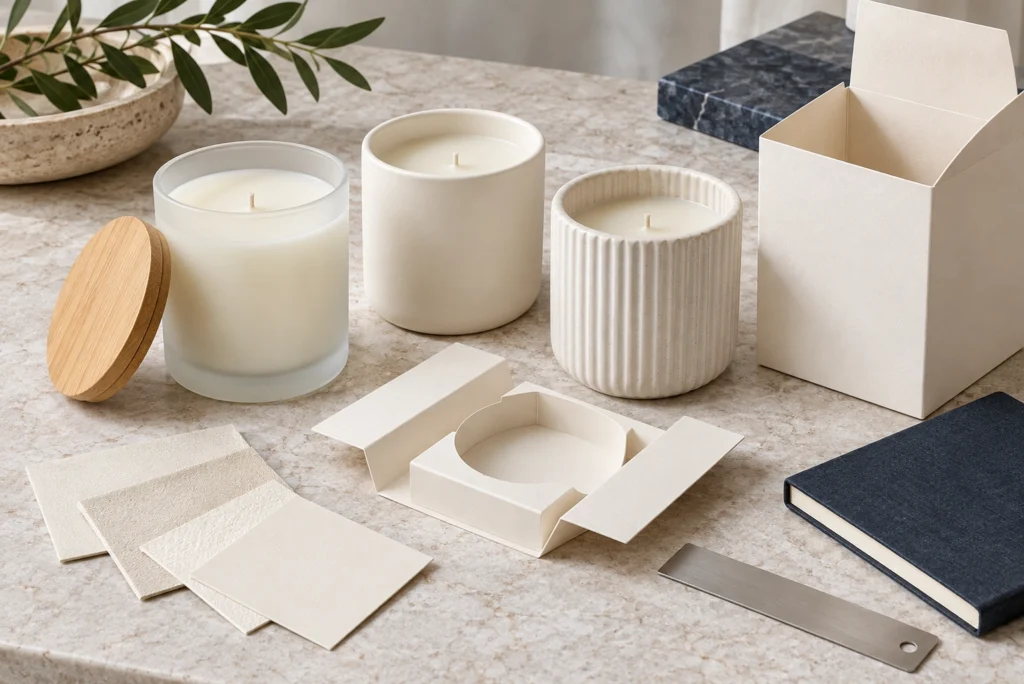
AI-generated concept image of candle and packaging samples; not a photograph of tested or approved project samples.
This guide is for retail buyers and private label teams preparing a candle order. It explains how to separate visual approval from performance review and how to keep a revised sample from being confused with an earlier version. For the earlier material-selection decision, see our ceramic versus glass candle container guide.
What should candle sample approval actually confirm?
Candle sample approval should confirm what has been accepted, which evidence supports the decision and what remains open. A good-looking sample can establish a colour direction or a packaging concept without establishing the performance of the final candle. Label each approval by its scope so the supplier and buyer reach the same conclusion.
Use separate decisions for appearance, product configuration, packaging and the required documentation. For example, a buyer may approve the ivory vessel colour while holding approval of the printed label until the final artwork is available. That decision should not be recorded as an unrestricted production release.
Start a shared sample record with the project name, product reference, sample version, dispatch date and the person responsible for each decision. Keep the same reference on photographs, measurement notes and revision messages. These fields are a suggested working format, not a claim that every supplier uses an identical process.
Eight checkpoints before a private label candle moves to production
Review the assembled candle and its intended retail pack together. The table below separates the item being reviewed from the record needed to make the approval useful later. Agree any dimensions, tolerances or acceptance criteria with the supplier before making the decision; this checklist does not prescribe universal numerical limits.
| Checkpoint | What to review | What to record |
|---|---|---|
| 1. Vessel and lid | Material, shape, finish, rim, lid fit and the intended candle use | Vessel reference, agreed dimensions, finish reference and lid version |
| 2. Wax and fill | Specified wax formulation, finished fill and visible surface condition | Agreed formulation reference and the net wax fill, separately from jar capacity |
| 3. Wick assembly | Wick specification, quantity, position and attachment in the sampled configuration | Wick reference and the configuration linked to the performance review |
| 4. Fragrance | Fragrance reference, intended scent direction and the agreed evaluation conditions | Approved fragrance version, evaluation notes and supporting information requested |
| 5. Finished appearance | Colour, decoration, cleanliness and any agreed visual examples | Photographs and written acceptance criteria for the selected finish |
| 6. Artwork and information | Logo position, print version, product information and applicable warnings | Final artwork file identifier, language version and review responsibility |
| 7. Retail and shipping pack | Insert fit, lid clearance, protection, pack contents and outer carton configuration | Approved pack specification and the agreed distribution review |
| 8. Evidence and release | Test scope, sample identity, unresolved changes and the order specification | Matched records, dated approval, open-item list and explicit release scope |
How do you check vessel, wax, wick and fragrance together?
Review a candle as an assembled configuration rather than treating each component approval as interchangeable. Ask the supplier to identify the vessel, wax formulation, wick assembly and fragrance version used in the sample and in any supporting evaluation. If one of those references changes, ask what review needs to be repeated before accepting the revised combination.
Keep vessel capacity and net wax fill as separate fields. A jar described in millilitres does not, by itself, establish the weight of wax supplied in the finished candle. Similarly, a reference photograph can show a lid colour without confirming the lid material or its final fit. Write the agreed value or reference into the specification instead of inferring it from a product title.
For fragrance, record the sample reference and evaluation conditions so comments remain comparable. A note such as “too strong” is difficult to act on without knowing which sample was assessed and how. Describe the scent direction and the observed difference, then agree whether the supplier should provide a revised fragrance sample or a revised finished candle.
The Scent-Sational scented candle collection can help identify a starting format. The approval record should still describe the exact configuration proposed for the individual order.
Which test records should match the candle sample?
Request records that identify the tested configuration and the assessment scope relevant to the destination market and retailer. Check the product reference, sample description, test date, method or standard edition, result and any limitations. A document showing a different vessel or configuration needs clarification before it can support the proposed order.
For a standards discussion, ASTM F2417-26 concerns candle fire safety, while ASTM F2058 addresses candle fire-safety labelling. As of 16 October 2026, ASTM lists F2417-26 as the active edition. Ask the responsible laboratory or reviewer to confirm the edition and scope needed for the project; citing a standard is not evidence that a particular candle has passed it.
Keep commercial scent or appearance feedback separate from the formal performance review. Arrange any required fire-safety testing through an appropriately equipped, qualified provider. This sourcing checklist is a document-review workflow and does not give instructions for conducting a burn test.
Use the Scent-Sational quality and documentation page to frame the enquiry, then request records for the selected product. Company-level information and a product-specific test report answer different questions.
How should packaging be included in sample approval?
Approve the packaging with the actual candle, lid and agreed accessories inside it. A box mock-up without the finished product cannot establish insert fit, movement inside the pack or the clearance needed to close the lid. Identify the packaging version alongside the candle reference so later artwork changes do not conceal a structural change.
Open and close the retail pack and inspect where the product contacts the insert. Record any movement, rubbing, loose accessories or difficult removal. Define the shipping arrangement as well: a gift box sent inside a larger order carton is a different pack configuration from the same gift box shipped individually to a consumer.
ISTA’s packaging design and testing guidance recommends selecting testing around the distribution environment and evaluating the product-and-package combination. Discuss the proposed route and final pack with a packaging specialist or laboratory before selecting a procedure. A decorative gift box alone does not establish transit performance.
If the candle is part of a set, use the home fragrance gift set buying guide for assortment planning, then bring the final set contents back into the sample approval record.
How do you close revisions and release the bulk order?
Close each requested change against a new sample or document version before giving production approval. A simple decision log should show the issue, requested correction, responsible person, evidence of the correction and current status. Keep unresolved items visible rather than carrying them forward inside a general “approved” message.
- Identify the revision. Give the changed sample, artwork or pack a distinct reference and explain what changed.
- Review the effect. Confirm whether the revision affects appearance only or also changes the product configuration, packaging fit or required evaluation.
- Record the decision. State exactly which version is approved and which items are still on hold.
- Connect approval to the order. Reference the accepted specification, artwork and packaging in the purchase documents.
- Keep a reference sample. Agree which physical sample and records will be used when reviewing production output.
For example, changing from a glass jar to a ceramic vessel after approving a scent is a configuration change, not a wording correction. A new label file may be an artwork change, but changing the insert or box dimensions is a packaging revision. Describing the change precisely helps the supplier determine the next sample or review step.
Ask for current sample availability, development charges, order quantity and production timing after the configuration is clear. These terms vary by the selected project and should be confirmed in the quotation rather than inferred from another product’s listing.
Frequently asked questions
Is a product photograph enough to approve a private label candle?
A photograph can support a limited appearance decision, such as a colour or decoration direction. It cannot replace the physical review of scent, lid fit, packaging fit or the records needed for the final configuration. Record a photograph-based decision as appearance approval only.
Can one approved candle sample cover every fragrance?
Do not assume that it does. Identify each fragrance and finished configuration, then ask the supplier or testing provider which evaluations can be shared and which need separate evidence. Keep that decision in the sample record.
What should happen if the wick or vessel changes after approval?
Issue a revised configuration reference and ask the responsible reviewer what must be assessed again. Do not let an older approval automatically stand for a different combination of components.
Does a supplier audit replace candle product testing?
No. A supplier audit concerns a stated facility or management scope. A candle test record concerns the identified product and assessment scope. Match each document to the question it is intended to answer.
What information should I send when requesting candle samples?
Send the product format, vessel preference, fragrance direction, desired finish, packaging plan, target market and intended quantity. Include the decisions the sample must support and ask the supplier to identify the sample version and available supporting records.
Prepare your candle sample brief
Send Scent-Sational your private label candle sample brief with the product reference, vessel and fragrance direction, packaging requirements, quantity and destination. Attach the current artwork or visual reference if available. Ask which sample configuration can be supplied, what still needs development and which records can be matched to that configuration.
Published 16 October 2026. This editorial checklist covers procurement decisions and record matching. External source pages were checked for this article; project-specific specifications and approvals must be agreed separately.